
Tree Trimming & Pruning in Nashville, TN
Tree trimming and pruning are related but distinct services. Trimming generally refers to shaping and cutting back overgrown or unruly growth for appearance and clearance, while pruning is a more targeted, health-focused practice that removes specific branches to improve a tree's structure, reduce disease risk, and encourage stronger growth. Nashville homeowners typically request this service for reasons like branches hanging over rooflines or driveways, limbs growing into power lines or fences, storm-thinned canopies needing cleanup, and trees that simply look overgrown or unbalanced compared to the rest of the yard.
Nashville Tree Removal is an independent referral website operated by Revolution 1 Media. Inquiries submitted here are routed to a participating independent local tree-service contractor who evaluates the tree and handles the actual trimming work.
Why Topping Harms Trees, and When to Trim by Season
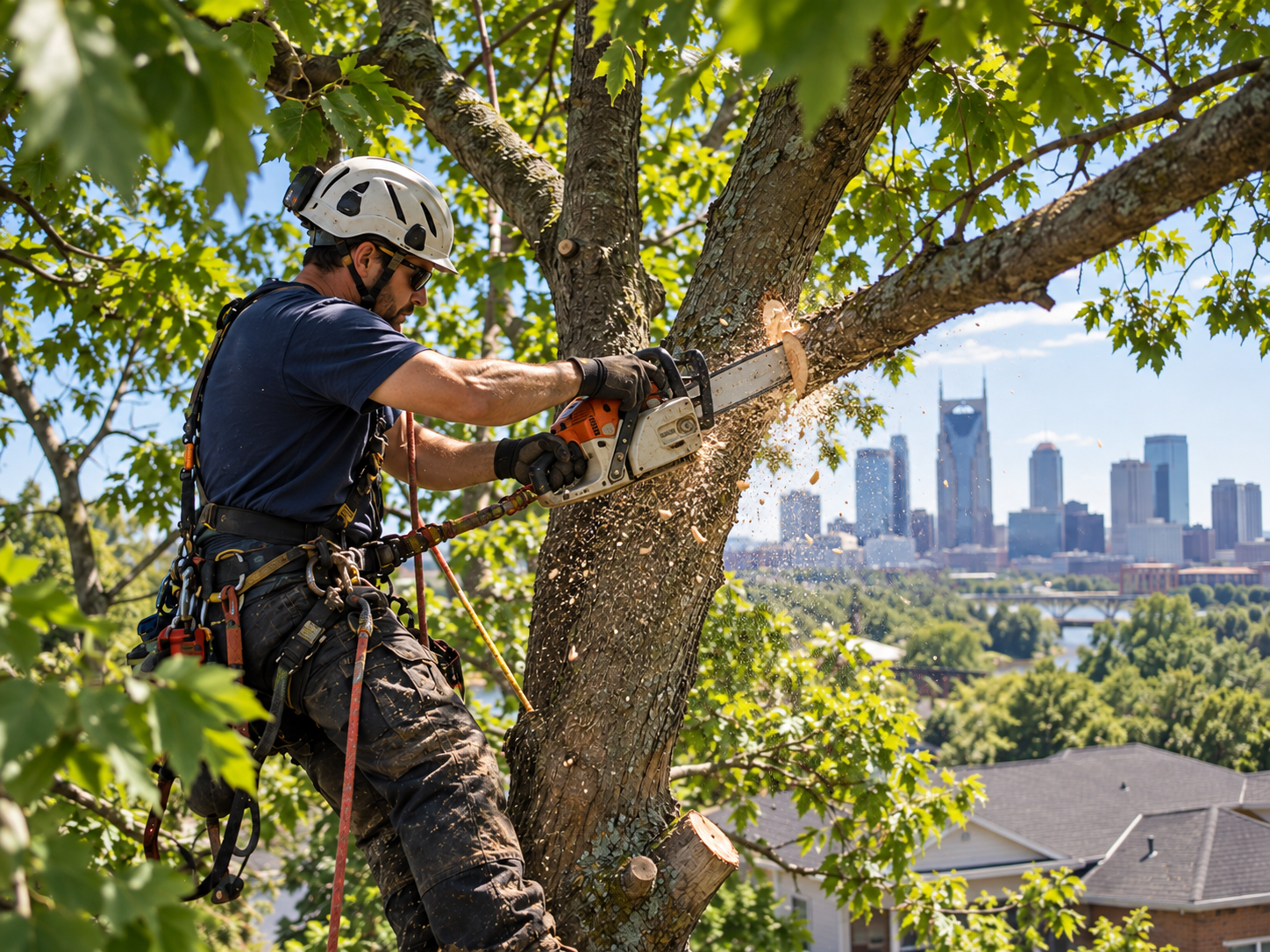
Topping, cutting a tree's main branches or canopy down to stubs to reduce height, is harmful and generally not recommended. It removes too much of the tree's leaf-producing tissue at once, triggers weak, fast-growing regrowth that is more likely to break in storms, and can stress or eventually kill a tree. A properly trained contractor uses selective pruning cuts instead of topping to manage size and canopy density.
Late winter, while a tree is dormant, is often the best window for structural pruning because it's easier to see branch layout without leaves and cuts heal well before spring growth. Dead or hazardous branches should be removed as soon as they're noticed regardless of season, light shaping can happen almost any time of year, and heavy pruning right before or during a Nashville summer heat wave is generally avoided since it stresses the tree.
Trimming vs. Removal: Which Does Your Tree Need?
Trimming can often extend a tree's life and improve safety when the tree is structurally sound, while removal becomes the better option when a tree is dead, severely diseased, dangerously leaning, or has more than half its canopy or root system compromised.
Trimming May Help When:
- The tree has isolated deadwood or overgrown limbs
- Branches are encroaching on a roof, driveway, or power line but the trunk and root system are healthy
- The canopy is dense or unbalanced but the tree shows no signs of decline
- Only routine shaping or clearance is needed
Removal Is Usually the Better Option When:
- The tree is dead or in advanced decline
- The trunk shows large cavities, cracks, or fungal growth at the base
- The tree is leaning more than it used to, especially after a storm
- The tree is too close to a structure and repeated trimming hasn't resolved the risk
A participating contractor makes the final trim-or-remove recommendation after an on-site evaluation.
Trimming generally focuses on shaping and cutting back overgrowth for appearance and clearance, while pruning is a more targeted, health-driven practice that removes specific branches to improve structure and reduce disease risk. In everyday use, homeowners often use the terms interchangeably.
Most established shade trees benefit from a structural check every 2-3 years, while young trees may need light shaping annually to establish good form. Fast-growing or storm-prone species may need more frequent attention.
Correct pruning cuts made at the right time of year rarely harm a healthy tree; the tree naturally seals over the cut. Problems occur when too much canopy is removed at once or when cuts are made improperly, such as with topping.
No. Branches near power lines should never be trimmed by homeowners; this work requires a professional who understands line clearance safety, and in some cases the utility company handles clearance directly.
In winter, dormant branches still have flexible bark and living tissue underneath, while dead branches are typically brittle, may have peeling bark, and show no budding in spring. A contractor can confirm this during an on-site look.
Yes, removing deadwood and thinning overly dense canopies reduces wind resistance and the chance of large limbs breaking in Nashville's seasonal storms, though it can't eliminate risk entirely.
Crown thinning is selective removal of some interior branches to let more light and air through the canopy, which can reduce wind load and improve the health of the remaining branches without changing the tree's overall shape.
Small, low branches within safe reach on the ground are often manageable for a homeowner with basic tools, but any trimming that requires a ladder, chainsaw, or work near a structure or power line is safer left to a professional with the right equipment and experience.
Tree Trimming & Pruning FAQs
What's the difference between tree trimming and tree pruning?
Trimming generally focuses on shaping and cutting back overgrowth for appearance and clearance, while pruning is a more targeted, health-driven practice that removes specific branches to improve structure and reduce disease risk. In everyday use, homeowners often use the terms interchangeably.How often should trees be trimmed in Nashville?
Most established shade trees benefit from a structural check every 2-3 years, while young trees may need light shaping annually to establish good form. Fast-growing or storm-prone species may need more frequent attention.Will trimming hurt my tree?
Correct pruning cuts made at the right time of year rarely harm a healthy tree; the tree naturally seals over the cut. Problems occur when too much canopy is removed at once or when cuts are made improperly, such as with topping.Can I trim branches near power lines myself?
No. Branches near power lines should never be trimmed by homeowners; this work requires a professional who understands line clearance safety, and in some cases the utility company handles clearance directly.How do I know if a branch is dead or just dormant?
In winter, dormant branches still have flexible bark and living tissue underneath, while dead branches are typically brittle, may have peeling bark, and show no budding in spring. A contractor can confirm this during an on-site look.Does trimming help prevent storm damage?
Yes, removing deadwood and thinning overly dense canopies reduces wind resistance and the chance of large limbs breaking in Nashville's seasonal storms, though it can't eliminate risk entirely.What is crown thinning?
Crown thinning is selective removal of some interior branches to let more light and air through the canopy, which can reduce wind load and improve the health of the remaining branches without changing the tree's overall shape.Should I trim a tree myself or hire a professional?
Small, low branches within safe reach on the ground are often manageable for a homeowner with basic tools, but any trimming that requires a ladder, chainsaw, or work near a structure or power line is safer left to a professional with the right equipment and experience.
Ready to Have a Tree Trimmed or Pruned?
Nashville Tree Removal connects homeowners with a participating independent local tree-service contractor who can evaluate the tree, recommend trimming or pruning, and provide an estimate.
Nashville Tree Removal is an independent referral website. We connect customers with one participating independent tree-service contractor at a time.